Welcome to the readers who are reading this right now. This is the first piece of content I’ve published since my website’s rebirth.
I’ve actually been thinking about what I’m about to share with you for a long time. Some friends suggested I become a vlogger, while others suggested I take advantage of living abroad to become a European supplement personal shopper. But after brewing over it for quite a while, I decided to start with the most plain and simple written record.
The primary reason is that there are still many interesting things waiting for me to do in my own life; I don’t yet have enough time and energy to produce polished educational videos, let alone consistently output a series. Secondly, in this era of fast-food knowledge and independent media, I hope to offer everyone some in-depth thoughts and discussions. Perhaps only when we are truly willing to settle down and read a piece of text can the arguments within it attract enough attention and contemplation, thereby triggering an endless resonance.
This actually brings up a very realistic and sharp question: In a society where everyone can be an independent media creator, and opinions about health are everywhere, who should you really listen to?
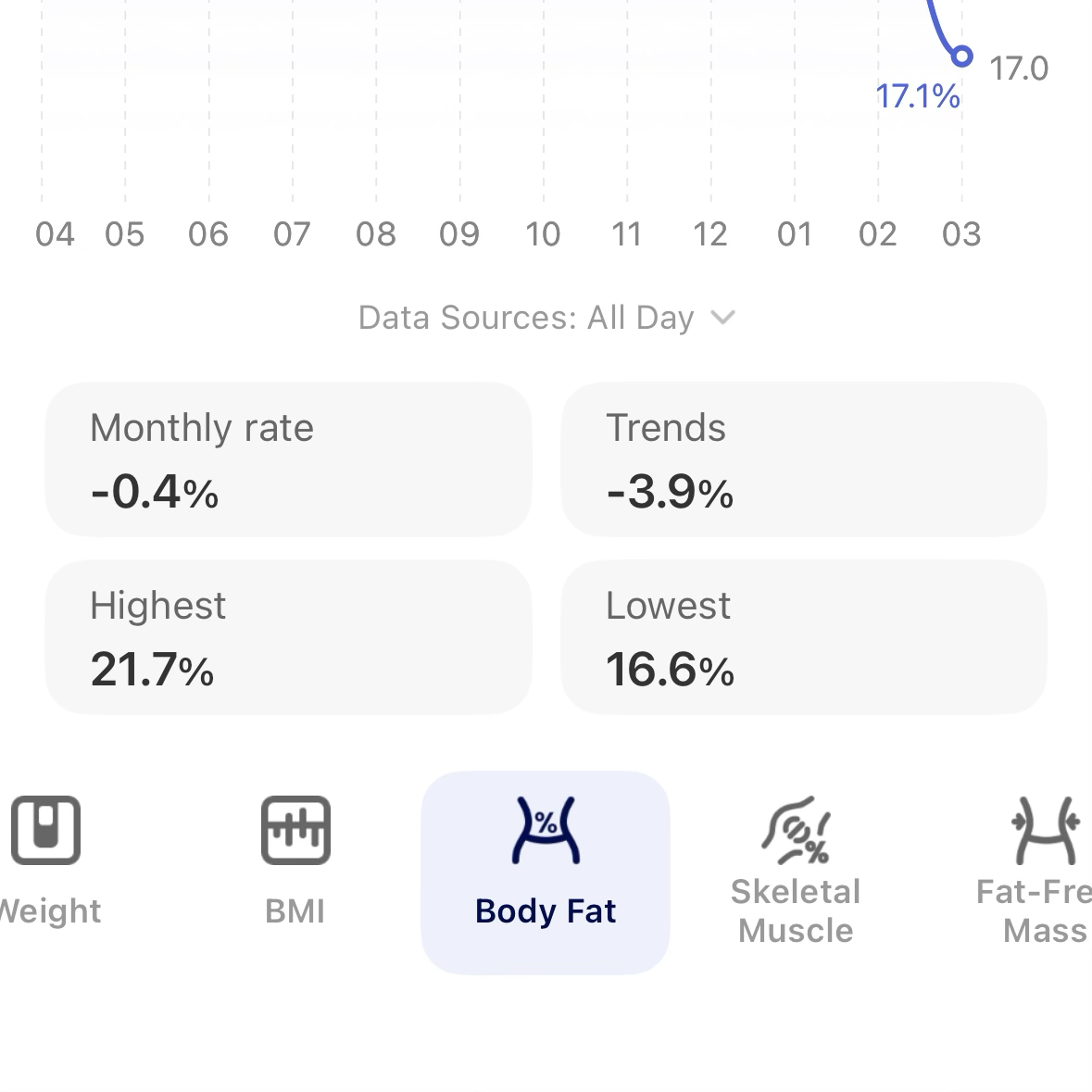
Having kept you in suspense for so long, what exactly am I going to introduce today? In short: Over the past half-year or so, I established a highly strict diet, fitness, supplement, and skincare plan for myself. I firmly executed them and reaped generous rewards. At 28 years old, I welcomed my life’s first true weight loss success and body recomposition.
Through this article, I want to break down some of the methods I used, as well as the mental journey behind them.
An Ordinary Person Trapped in “Normalcy”: From Gaining Weight to Hitting a Bottleneck
I am 28 years old this year (2026) and 176cm tall.
Looking back at my records, I started gaining weight around 2020. Before that, my weight had always hovered around 60kg. So far, the heaviest moment of my life was in February 2023, reaching 72.26kg. This number might not sound exaggerated for my height, but my face gets fat—with 24% Mongolian blood, I seem unable to escape the “gift” brought by my genetics.
Therefore, “weight loss” has repeatedly appeared on my to-do list over the years. I tried running many times, gradually increasing from 3km to 5km, and maxing out at 10km. I wanted to be thinner and wanted a good physique, but back then, I lacked a scientific and systematic understanding of “changing body composition.” I didn’t control my diet; at most, I vaguely “ate a bit less” without having any idea what the exact caloric figures were.
In the second half of 2023, I moved to Denmark. My place is 10km one way from the office, and since cycling is a highly cost-effective commuting tool in Denmark, I started a routine of cycling 20km every day to and from work. Cycling is great cardio, and by June 2024, my weight dropped to 66.71kg. I really enjoyed the process and definitely saw changes in the mirror.
However, after adapting to this new energy expenditure, my body started craving more food, and I gradually ate more and more. Until October 2024, when I returned to China, I completely lost control of my mouth because I missed my hometown food so much. By the time I returned to Denmark, my weight had bounced back to 71.67kg. Worse still, because my body was already completely adapted to the 20km daily cycling intensity, getting back on the bike no longer brought any noticeable weight loss.
A Geek’s Awakening and That “Clumsy” Exploration
I really wanted to change the status quo—and not just to get thinner, I wanted to build more muscle.
Fortunately, years of cycling gave me leg muscle mass far exceeding the average person (even surpassing the recommended standards built into the gym’s InBody scale), but my upper body strength was extremely weak. So, in August 2025, I returned to the gym.
One day while working out, a thought suddenly popped into my head: “My body definitely isn’t building muscle as fast as it did at 18. What should I do? I need to use some ‘tech’! If I eat completely enough protein and max out every normal supplement except testosterone and steroids, can I recreate or even surpass my body’s muscle-building effects from when I was 18?“
I not only thought this, but I actually did it. I started asking AI how much protein I needed and what supplements to take, kicking off some incredibly raw, hands-on experimentation.
Initially, because life was too busy to research recipes, I forced myself to eat at least 10 eggs a day, and for carbs, I solely relied on Protein bread from the supermarket. Looking back, this was absolutely not the optimal solution: While the eggs didn’t make my total cholesterol skyrocket (after eating like this for a month or two, my blood test showed my total cholesterol was actually lower than a year ago—confirming the latest scientific research and relating to my overall calorie control; however, caution is still needed, as a certain percentage of people are indeed more sensitive to dietary cholesterol regarding blood lipids, a specific situation I still need to research further through literature), they did contain a lot of fat. Furthermore, the protein in the Protein bread mainly came from vital wheat gluten, which isn’t the best source for building muscle. More fatally, to control my weight, I only ate two slices of bread per meal, meaning my carb intake was severely deficient, which directly impacted my strength performance in the gym.
But this was also an incredibly lucky experience. It was precisely through this “clumsy” trial and error that I learned and developed the habit of reading product nutrition labels. I began to realize: in this era where AI is ubiquitous, when it comes to what we put in our stomachs, we absolutely no longer need to rely on “feeling” and “guessing” in the dark.
Building a System: Precise Calculation and My Diet Hacking Techniques
Later, as the pace of life finally eased up a bit, I finally had time to sit down and tailor a diet plan for myself. I was no longer simply “casually eating a bit less,” but building a highly rigorous system.
First is the precise foundational calculation. Based on the body fat scale data, I calculated my total daily caloric needs, even subdividing them into three scenarios: stay-at-home days, commute days, and commute-plus-gym days. On this basis, I strictly set a daily caloric deficit of 500 kcal. My macronutrients are absolutely non-negotiable: protein must be fully met (2g/kg of body weight daily), healthy fats are guaranteed at a minimum of 45g, and the remaining calories after deducting the deficit are entirely allocated to carbs.
Second is the “hardcore” execution of recording. Every time I cook, I weigh and record the raw weight of the ingredients and the grams of oil used. I even record the cooked weight after baking, and then directly throw it all to the AI to help me precisely calculate exactly how much I should eat for each meal. (I will release a separate detailed tutorial on how to use AI for nutritional planning later).
So, what do I actually eat?
Every morning, rain or shine, it’s 300g of Skyr (an Icelandic yogurt providing 10g of protein per 100g) paired with 40 to 60g of oats. Oats have a low glycemic index, and the beta-glucan they contain helps lower cholesterol. As for Skyr, I must confess its original flavor is very sour and extremely hard to swallow. At first, I added sugar-free sweeteners, but found the taste was still bland; later, I had a sudden inspiration and found a sugar-free 1:11 concentrated fruit-flavored drink (usually mixed with water) at the supermarket to mix in. Bam, problem solved! Now I get to eat delicious, fruit-flavored yogurt every day! And it’s genuinely high-protein at 10g/100g, entirely unlike those “healthy yogurts” in the supermarket with only 3.8g/100g.
For my main meals, I figured out a recipe of baked chicken breast and potatoes. I also put effort into the cooking details. Baking chicken breast and potatoes requires brushing on a bit of oil, but modern diets generally have way too much Omega-6 and are severely lacking in Omega-3. To balance this ratio, I personally choose avocado oil (which has a higher smoke point) or olive oil (not heat-resistant, used for cold dishes)—both higher in monounsaturated fats—as alternatives when cooking. They contain more Omega-9, and I also supplement with fish oil capsules with my meals, or occasionally eat salmon. Furthermore, to make the oil coat better, I bake the chicken breast twice: the first time to bake out the excess water and drain it, then a second bake. Even so, the amount of oil I actually use is very small; the cooking oil alone doesn’t even reach my minimum daily fat requirement. As for the taste? Just add a tiny bit of BBQ sauce at the end, and isn’t it just like eating barbecue every day?!
The Magic of Cognition: Defeating Cheap Dopamine
Reading this, someone might ask: “With this setup, how can you swallow it? How did you turn the beautiful act of eating into such a miserable chore that sounds hard to swallow?! I rely on a tasty bite of food every day to relax my mood!”
This was also the core resistance in the entire process. You have to understand that the temptation of delicious food stems from a dopamine reward mechanism deeply etched into our genes. Taking a plate of good food right in front of you and putting it in your mouth is a triple enjoyment of smell, taste, and sight. But for someone like me, who thinks every day about how to lose fat, build muscle, and look better, this bit of dopamine is no longer enough to satisfy me.
Admittedly, I am no saint devoid of worldly desires. I’ve experienced countless times where I couldn’t control my impulses and rushed into McDonald’s to inhale three fried chicken burgers in one breath (while mentally dressing it up as a “cheat meal”); I’ve also rushed into the supermarket downstairs, bought a 200g bag of cheap potato chips (only about 10 DKK in Denmark), and eaten it all in one sitting; more often, I lied to myself that “I need energy before hitting the gym” and rushed into a convenience store for a 100g bag of gummies (I am genuinely addicted to those things).
These impulses were all real, so how did I push through? Because the true magic happened in my brain.
Every day, I play interviews with top science communicators on YouTube (like Steven Bartlett, Andrew Huberman) in the background, constantly upgrading my cognition about food. You hear a lot of mind-blowing concepts/facts (though I watch them often, I never blindly follow their extreme protocols. For instance, one major influencer recommends taking tens of thousands of IUs of D3 daily, but after consulting literature and my own blood tests, I opted for 4000 IU, and verified that this was perfectly sufficient for me. It’s better to read no books than to believe everything you read; all internet advice must be cross-verified through your own careful research).
With just a little research, you’ll discover that the modern food industry actually operates on a ruthless “Impossible Trinity”: Cheap, Delicious, Healthy. The “normal diet” that normal people are accustomed to is often the result of businesses sacrificing health in pursuit of profit.
For example, if you carefully compare nutrition labels, the calories in 100g of potato chips are roughly equal to 900g of Skyr yogurt! Eating 100g of chips not only pumps you full of massive calories but also means you lose out in vain on the 90g of high-quality protein those calories could have provided you. Plus, you won’t feel full at all afterward, and it’ll highly likely push your sodium intake for the day over the limit! In Denmark, the cheapest 200g bag of chips is around 10 DKK. Do you really think businesses will spend resources to create a 40 DKK “healthy chip” that compromises on taste just for your health? Would you really choose a 40 DKK, unpalatable “healthy chip” over a 10 DKK, 200g bag of guilt-free joy just for health? A normal person would struggle to eat 900g of yogurt in one sitting, but anyone can effortlessly demolish 200g of chips!
As I was constantly brainwashed by these scientific insights, the magic happened. Because this diet protocol of mine inadvertently created a huge caloric deficit (500 kcal, which is a bit high), even if I occasionally couldn’t resist sneaking a snack, as long as I stuck to my strength training and ate enough protein, I still saw obvious changes in my physique in the mirror!
At that moment, a new dopamine reward pathway was established.
Compared to the fleeting joy obtained just by opening your mouth, watching your body transform is a “delayed gratification.” Once you taste the sweetness of getting better, those lower-level pleasures no longer seem important. That’s why I was ultimately able to adapt to this seemingly dull lifestyle. And in reality, it truly isn’t dull. I have more abundant energy, I have other pursuits, and the way I experience happiness in life has fundamentally changed.
The Ingenious Human System: Feedback Must Come Before Persistence
Speaking of this, I must share a massive shift in my mindset.
Thinking back on my past weight loss attempts, I always held a highly prevalent belief: I’ll lose weight first by running, and then go to the gym to build muscle. Unfortunately, this beautiful wish never materialized.
Looking back now, it’s not that running itself is bad—the benefits of aerobic exercise for cardiovascular health are irreplaceable. The real reason is that the human body is an incredibly precise system; for every little change we make, it provides extremely honest feedback.
But in the past, if I didn’t precisely control my dietary system and relied solely on running to create caloric expenditure, the external changes to my body were simply too subtle and too slow. In this precise feedback loop, if you delay receiving clear “visual feedback,” the brain gets extremely frustrated and gives up easily.
Only now do I completely understand: Seeing results quickly is the only antidote to motivate yourself to keep going.
Forming a habit takes a long time. I fantasized every day about going to the gym 7 times a week, only to find that I probably only managed about twice a week in the end. This is also why my current strategy changed. I first poured all my limited exercise time into strength training at the gym. Through strict daily dietary control paired with strength training, the muscle lines slowly appearing in the mirror gave me the most direct and intense positive feedback. It was this sense of achievement that pushed me continually forward.
I still firmly believe today that aerobic training (like running) is extremely important. But my plan is: first use the gym to lock in my habit and motivational foundation, and in the future, when my life can free up more time for exercise, systematically reintroduce aerobic training.
I have to marvel once again at the ingenuity and honesty of the human body—whatever precise input you give it, it will meticulously present the corresponding true feedback.
The “1+1+1>3” Recomposition Rule and the Two-Week Miracle
Over the past few months, this body recomposition system has completely renewed me; I even feel like my personality has changed. If I had to rank these plans by importance, my answer would be: Diet Plan > Fitness Plan > Supplement Plan > Skincare Plan.
Diet is the foundation of everything; it’s the hardest to stick to, yet also the easiest. It is the first step in building your healthy dopamine feedback system. Fitness is the most potent enhancer; paired with the diet, you’ll see returns in the mirror within weeks. As for supplements, without the first two as cornerstones, you won’t see the 1+1+1 > 3 effect (though in practice, supplements can be maxed out from day one).
I originally thought this was just my personal evolution, but when I returned to China for the Spring Festival, I brought this combo to my family. After relatively strictly executing it for just two short weeks, on the day of departure, my dad drove me to the station and voluntarily told me: “I feel like my mind is clearer, and I’m thinking much faster.”
Just two weeks! This convinced me that ordinary people aren’t unwilling to pursue health; they just lack a system and are trapped in the pitfalls of the food industry.
The Pareto Principle: Leveraging 80% of the “Extraordinary” with 20% of the Effort
As my research deepened, I realized how little I knew. I now even want to re-learn the biochemistry I failed to master in the past.
I started regularly following the updates of Silicon Valley billionaire Bryan Johnson. A few years ago, I thought this guy—who spends millions of dollars a year and even swapped blood with his son for his body (he stopped that a while ago)—was a madman. Now, I see him as a pioneer pushing anti-aging to its absolute limits. He spends millions annually and has a team of dozens doing research for him. Whether he ultimately dies or not is unpredictable, but it’s obvious he will live longer and better than the average person.
In fact, the majority of my supplement list is inspired by his public “Blueprint”. But I don’t need to spend millions of dollars. Here, the Pareto Principle (the 80/20 rule) applies: An ordinary person can use 20% of their effort and cost to replicate 80% of his results.
I’m about to make a bold claim, and I don’t know what you’ll think:
When ordinary people find what you’re doing completely incomprehensible, it doesn’t necessarily mean you’re doing it wrong; it’s quite possible you’re doing it right.
Because ordinary people only have ordinary pursuits, which usually lead to weight loss plans that have a 95% chance of failing, an ordinary lifespan, and an ordinary life. Even if you want to pursue a tiny bit of excellence in anything, you have to pay a slightly unordinary price. I have absolutely no malice toward ordinary people, and I believe everyone has the capacity to pursue excellence. My perception of myself is just this—”an ordinary person in pursuit of an extraordinary life.”
Don’t let me hear your complaints about life. Don’t tell me you don’t have the time or conditions to prepare this kind of food, or that you have social obligations you can’t get out of. Complaining to your heart’s content won’t help your life one bit; only action can bring change.
So, returning to our question at the beginning of the article: In a society where everyone can be an independent media creator and voice their opinions, who do you listen to?
I think the best answer should be: First, listen to the top masters, then listen to science, and finally, listen to yourself.
(As for exactly what is in my “million-dollar-value” streamlined supplement list, and how I use AI to build a diet plan, we’ll talk about that in the next post.)
Leave a Reply